Dungeon Crawler Carl, Book 1: The Complete Guide
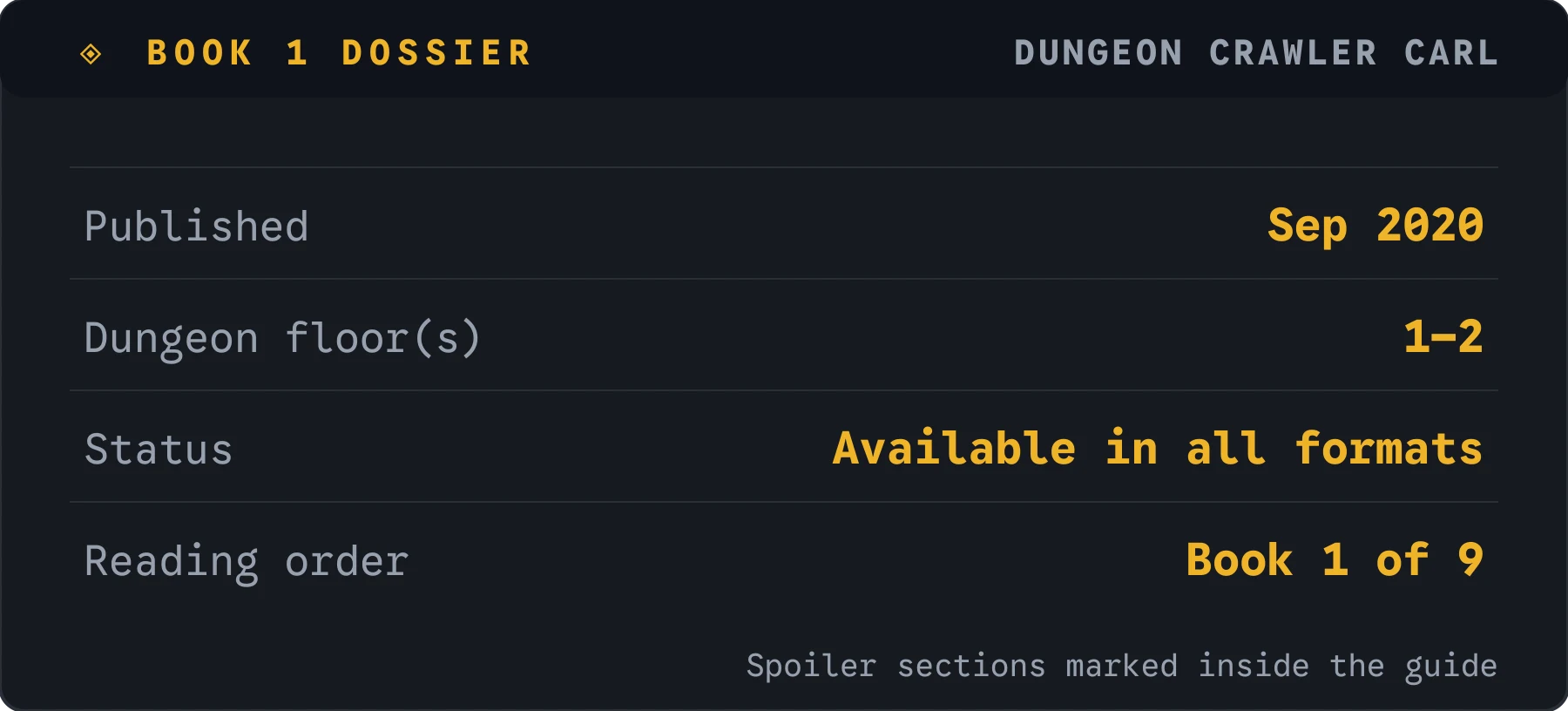
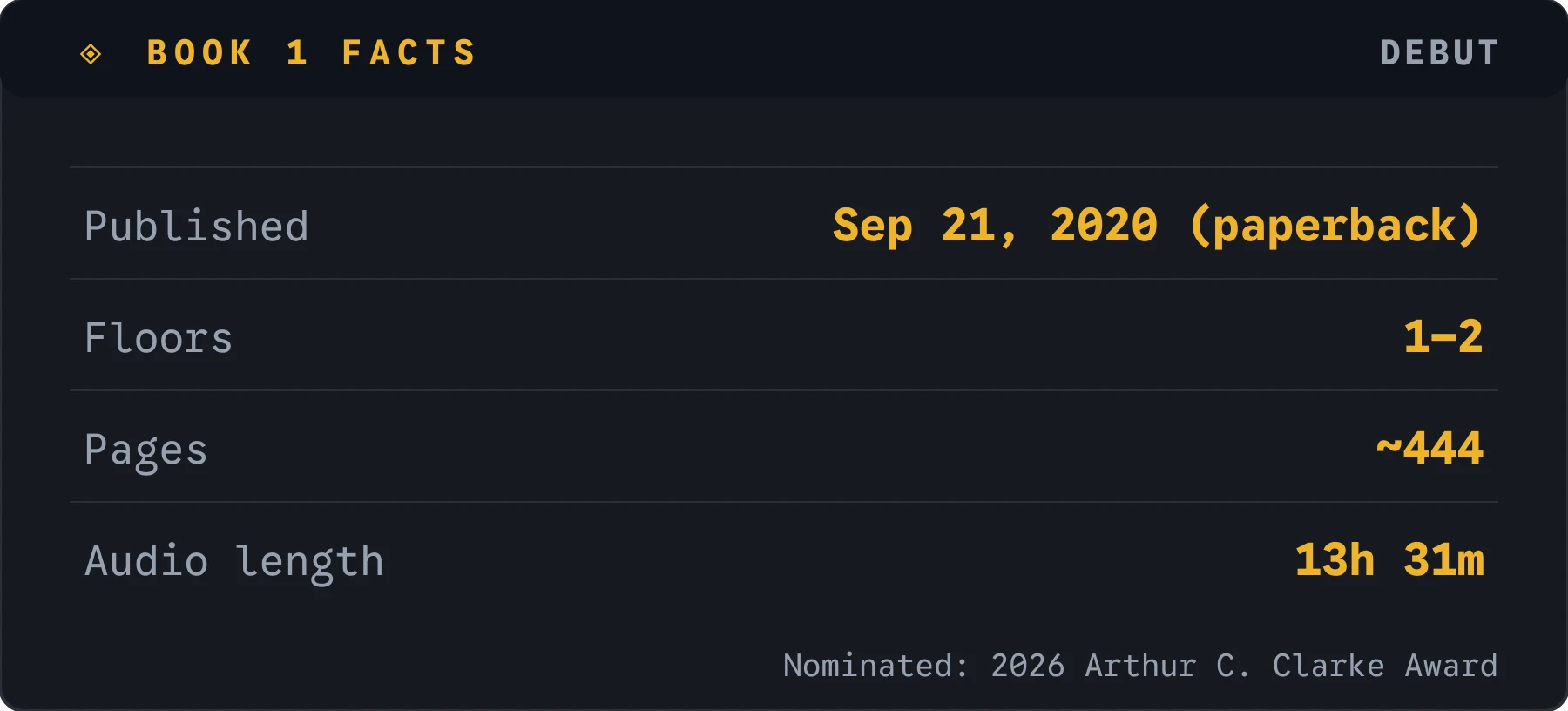
Book one — simply titled Dungeon Crawler Carl — is where the galaxy’s cruelest game show meets its most stubborn contestant. Published September 21, 2020 (paperback), with the Kindle edition following October 2, 2020, it covers floors one and two of the dungeon and introduces nearly everything the franchise now runs on: Carl, Princess Donut, Mordecai, the talk shows, the sponsors, and the Borant Corporation’s smiling cruelty.
The Setup (Spoiler-Free)
Carl’s bad night is legendary among readers: betrayed by his girlfriend, locked out of his apartment in the rain, wearing boxer shorts and a leather jacket when the sky opens and alien machinery demolishes Earth’s surface. The subway entrance in front of him becomes the front door of Dungeon Crawler World — season eighteen — and his ex-girlfriend’s Persian show cat, Princess Donut, follows him in.
The dungeon’s systems awaken Donut’s intelligence and speech. A mentor named Mordecai teaches them the rules. And within the first two floors, Carl does the thing that defines the entire series: he insults the wrong powerful entity on a live broadcast, turning himself into the dungeon’s most compelling villain-of-the-week and its most beloved underdog simultaneously.
What the Book Establishes
Book one is load-bearing for the whole series. It locks in:
- The game-show structure — crawlers are entertainment, and ratings are resources.
- The party — Carl, Donut, and Mordecai’s mentorship, plus Donut acquiring Mongo as a pet.
- The enemies that echo — Carl’s feud with Maestro of the orc-based Skull Empire starts here, from a talk-show insult.
- Donut’s crown — the Enchanted Crown of the Sepsis Whore and its terrible long-term price, one of the series’ best slow-burn plot devices.
New readers: this is the correct starting point, full stop. There are no prequels and no required reading order complications. Our reading order guide covers editions and formats.
Reception: The Sleeper That Kept Growing
Book one’s trajectory is the publishing story of the decade. Self-published on Amazon with no backing, it built word of mouth through the LitRPG community and then broke out of it entirely. By May 2026 it had sold more than 2.7 million copies on its own, spent 19 straight weeks on the New York Times bestseller list, and earned a nomination for the 2026 Arthur C. Clarke Award — mainstream science fiction’s stamp of approval for a book about a man fighting aliens in his underwear.
Books-A-Million named it their inaugural Book of the Year, and the Peacock television adaptation greenlit by Seth MacFarlane’s Fuzzy Door exists because this book convinced a studio that a man, his ex’s cat, and a sadistic alien gameshow was a franchise.
Floors 1–2: What to Expect
The first two floors are the tutorial that isn’t. Mordecai walks Carl and Donut through the rules — classes, skills, loot, boss mechanics — while the story teaches its real lesson: the dungeon is a television production, and every mechanic exists to generate drama for viewers.
Expect: the first boss fights, Donut’s transformation from show cat to show star, the first sponsor negotiations, the first talk-show appearance (and the first catastrophic one), and the establishment of the Desperato-adjacent social world that later floors blow wide open. The tone lands here too — gallows humor wrapped around genuine grief, a register the series never abandons.
Editions and Formats
Book one exists in three main flavors:
- Kindle/ebook — Dinniman retains digital rights and publishes directly; cheapest option, around $5.
- Ace paperback/hardcover (August 2024 re-release) — the retail editions containing serialized passages of the bonus novella Backstage at the Pineapple Cabaret. Details in our editions comparison.
- Audiobook — narrated by Jeff Hays (13 hours 31 minutes), the version that built half the fandom. Our audiobook guide has the full breakdown.
How It Connects Forward
Book one’s floors (1–2) hand off directly to book two, Carl’s Doomsday Scenario, where class selection and the Floor 3 open world expand the game. The relationships established here — Donut’s stardom, Mongo’s arrival, Mordecai’s secrets — pay off across all eight published books.
Frequently Asked Questions
Is book 1 self-contained?
It resolves its own floors’ arcs while planting long-term threads. You can stop after book one and feel satisfied — nobody does.
How long is book 1?
Around 444 pages in print, 13.5 hours in audio — the shortest entry in the series; later books grow substantially.
Do I need to know RPGs?
No. The mechanics are taught through the story, which is precisely why this book became the genre’s recommended on-ramp.
Where can I buy it?
The publisher’s series page lists retail options; Matt Dinniman’s site links the ebooks; series background is on Wikipedia.
Why Book 1 Works on Non-Genre Readers
The most cited conversion statistic in this fandom is anecdotal but consistent: a large share of readers report they do not play video games and had never heard of LitRPG before Dungeon Crawler Carl. Book one accomplishes this with three disciplined choices.
First, the game mechanics are taught as survival rules, not homework — Carl learns them wrong before he learns them right, so the reader learns alongside. Second, the emotional stakes are pre-loaded: the series opens with betrayal and loss before the aliens arrive, so the absurdity that follows sits on a foundation of real feeling. Third, the humor targets systems, not people — the joke is never on the grieving, always on the machine.
The result is a debut that functions as genre gateway drug, which is why the Clarke Award nomination mattered so much to the community: it validated what the fandom had been saying about the series’ crossover quality. If you are the person friends keep recommending this to, this book is why — start here, and keep our characters guide bookmarked for when the cast expands.